
About Kit Cars
A kit car is exactly what it sounds like: a car supplied to you as a set of components rather than a finished vehicle, which you then assemble yourself, usually styled after a car you could otherwise never afford. Many are also built around a “donor car” — an existing vehicle, often a common one like a Beetle or a Mustang, that supplies the engine, transmission, and running gear underneath the kit’s new body and chassis.
The idea properly took off in post-war Britain. Older cars were being scrapped faster than their mechanicals wore out, so enthusiasts started stripping them for parts and building new bodies on top — the “specials” movement. It grew into a genuine industry for a very British reason: Purchase Tax, which taxed complete cars at rates as high as 50–66% through the mid-1970s, didn’t apply to a car sold in component form. Buy the pieces and assemble it yourself, and you dodged the tax entirely. That loophole is a big part of why so many kit car manufacturers on this list are still British, decades later.
The four kits below are proven starting points that balance excitement, support, and realism for a first project.
Not ready to commit to a build? You don’t have to take any of these on faith. Every car on this list can be hired for the day or week through our Specialist Directory — a proper way to feel what you’re building before you commit. Just click on the car and select Classic Car Hire to find a UK operator, whether you’re local or planning ahead for a visit.
1. Caterham Seven
Best for: Flawless factory documentation, legendary handling, and pure driving dynamics.
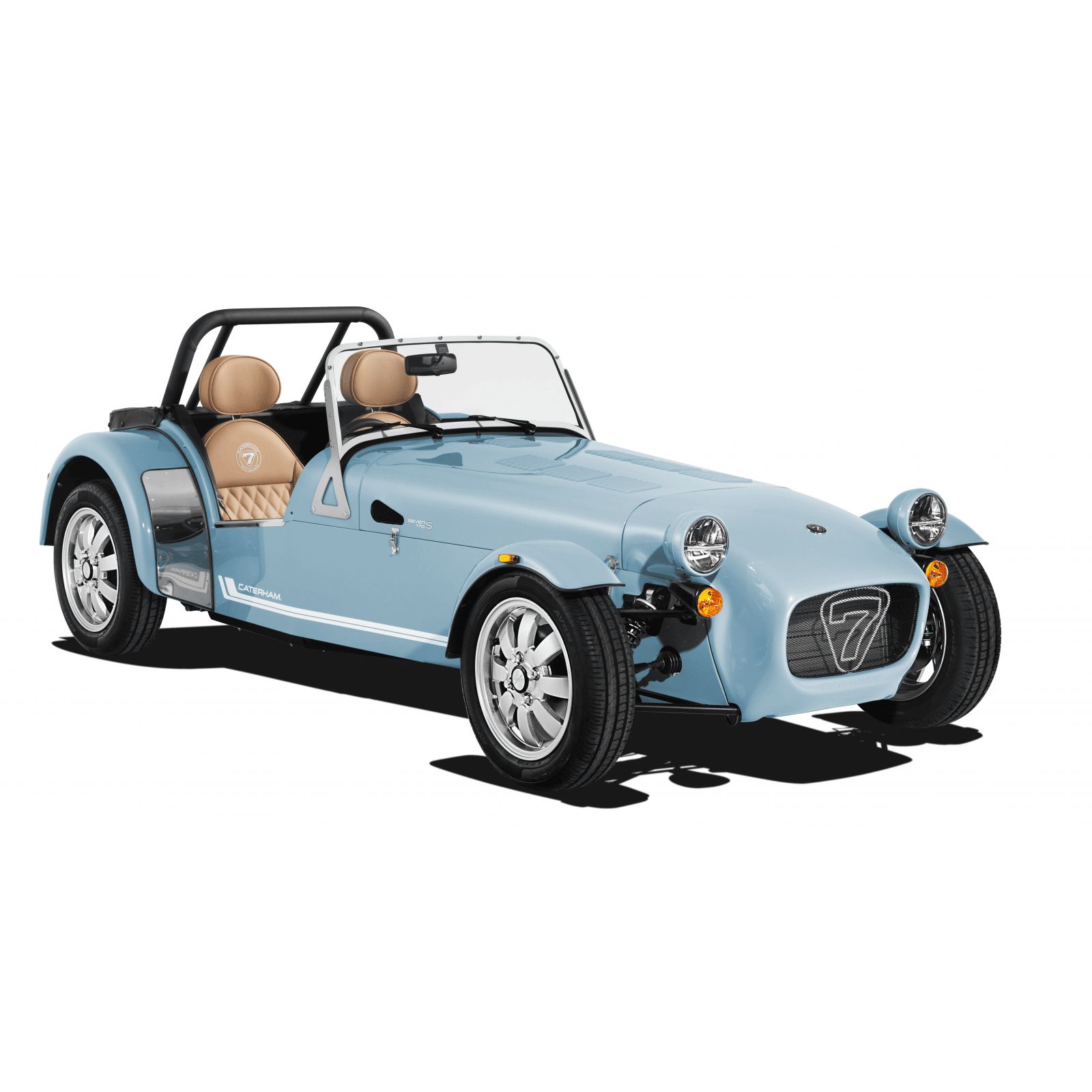
Based on the Lotus Seven, designed by Colin Chapman — the legendary engineer behind Lotus Cars — in 1957, the Caterham is the closest thing to that original car you can still buy new. Most replica kits have you hunting for parts from scrapped donor vehicles. Caterham doesn’t work that way. It ships as a genuinely complete kit — every bolt, washer, and wiring harness arrives labelled and boxed, more Meccano set than engineering project. The build manual is famous in the kit car world for how clearly it walks you through each stage, and that clarity carries through to registration: a Caterham is widely considered one of the easiest kits to get through the UK’s IVA test, since it’s engineered to meet the standard from the outset. The 420R is often called the “drivers’ choice” of the range — a 2.0-litre Ford Duratec engine, genuine track-focused kit, and enough performance to be taken seriously without tipping into the near-unusable-on-the-road territory further up the range.
Cost: From £35,000
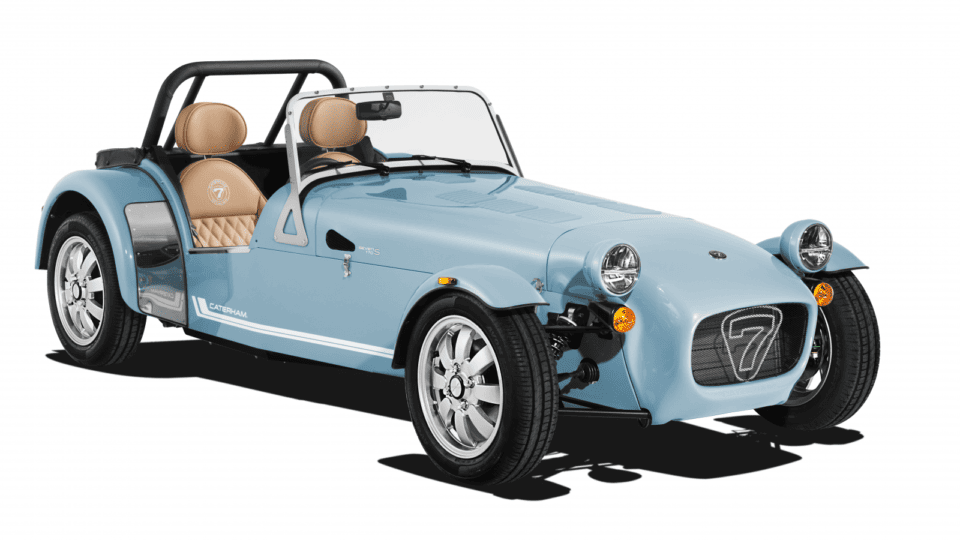
Unboxing A Caterham 420R Kit
In this video, you can see the body panels and chassis arrive fitted as one piece, as shown below – more of a shell than a kit of loose parts, with the dashboard and its controls already installed. All the other components arrive labelled against the assembly guide, so the early stages are more about organisation: working out what’s in each box and where it fits, before the actual mechanical work begins.
2. Factory Five Mk4 Roadster
Best for: V8 power, decades of proven support, and a silhouette everyone on the road recognises.
Based on the Shelby 427 Cobra, the Factory Five Mk4 Roadster is built as an accurate reproduction of its looks and character rather than a numbered replica — the closest most of us will ever get to owning an original, and about as approachable as a V8-powered classic replica can be. The base kit is built around a donor 1987–2004 Mustang, so you’re pulling a proven engine and transmission from a car that’s easy to find and even easier to work on. Drop that V8 into the Roadster’s lightweight tube frame and you get side pipes that make sure everyone within a block knows you’ve arrived.
Cost: USA Kit From $12,990 (approx. £9,600), plus shipping and duty. If you’d rather buy and build closer to home, see the UK-based Pilgrim Sumo alternative below.
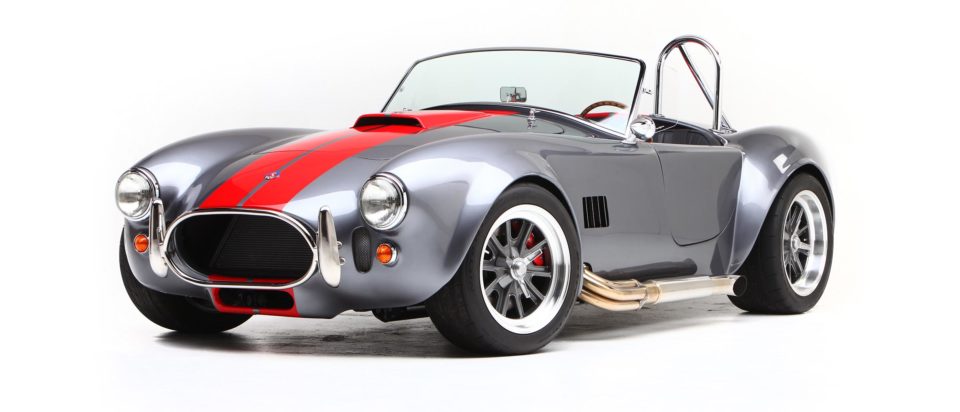
What It’s Like To Drive: A well-built Mk4 feels every bit as muscular and theatrical as its inspiration. Big-capacity V8 power, classic proportions, and a raw, analogue driving position add up to real theatre, not just straight-line speed. It’s not a daily driver, and it isn’t trying to be. For special road trips, shows, and track days, it delivers the noise, stance, and presence people expect from a Cobra-style roadster, and turns every fuel stop into a conversation.
Alternative: Pilgrim Sumo Mk3
Best for: Buyers who’d rather build closer to home — a genuinely UK-designed and UK-built Cobra, with no import shipping or duty to worry about.
If you’d rather not deal with an American kit at all, Pilgrim’s Sumo Mk3 is the strongest domestic alternative. It’s quietly become one of the best-selling Cobra replicas ever built — thousands on the road since production began in 1985 — and takes a different mechanical route entirely, built on Ford Sierra and Granada-based running gear rather than a Mustang. Multiple V8 engine options are available — Rover, Ford 302, Chevy LS, or Chevy 350 — to suit budget and ambition.
Cost: From £3,460 (+VAT).
Video Credit: Pilgrim Speedster and Sumo Cobra out on the road together — both built at the same Sussex workshop, filmed side by side.
3. Pilgrim Speedster
Best for: Vintage elegance, scenic weekend cruising, and a genuinely timeless aesthetic.
Based on the Porsche 356 Speedster of the 1950s, the Pilgrim Speedster is built on a shortened Volkswagen Beetle chassis — the same recipe Chesil used for decades, but from a manufacturer that’s still actively trading today. Pilgrim V8, based in West Sussex, has been building replica kits since the 1980s and continues to produce the Speedster both as a self-build kit and as a factory-built turnkey car. Builders who’ve compared the two note the Pilgrim body sits its headlights lower, closer to the original 356’s proportions, and its sub-chassis is galvanised rather than powder-coated for extra longevity.
Cost: From £4,500 (kit only — donor Beetle sourced separately).
What it’s like to drive
Pilgrim’s Speedster runs a rebuilt 1,600cc VW flat-four with twin-choke carburettors, paired with fully independent front suspension and rack-and-pinion steering for handling that’s noticeably sharper than the original 356 ever offered. It’s a car built for open-top, unhurried driving — light, characterful, and full of that unmistakable air-cooled soundtrack, rather than something built to chase lap times.
4. The Burton
Best for: Pre-war European style at the lowest entry cost on this list, built on Europe’s simplest classic mechanicals.
Based loosely on pre-war European roadsters from Bugatti, Jaguar, Talbot-Lago, and Delahaye, the Burton wraps that shape around a Citroën 2CV chassis — genuine 1998 Dutch design, still in production today under Burton Car Company, now part of the French 2CV Méhari Club Cassis group since a 2022 acquisition. It’s a completely different angle on classic kit cars: light, simple, and about as far from a V8 roadster as this list gets. The donor 2CV supplies the engine, chassis, and suspension unchanged; the Burton body simply replaces the original bodywork on top.
Cost: From €10,000 for the body conversion kit — you’ll need to supply your own donor 2CV separately. Now available through an official UK distributor, The 2cv Shop, as either a self-build kit or a factory-built option.
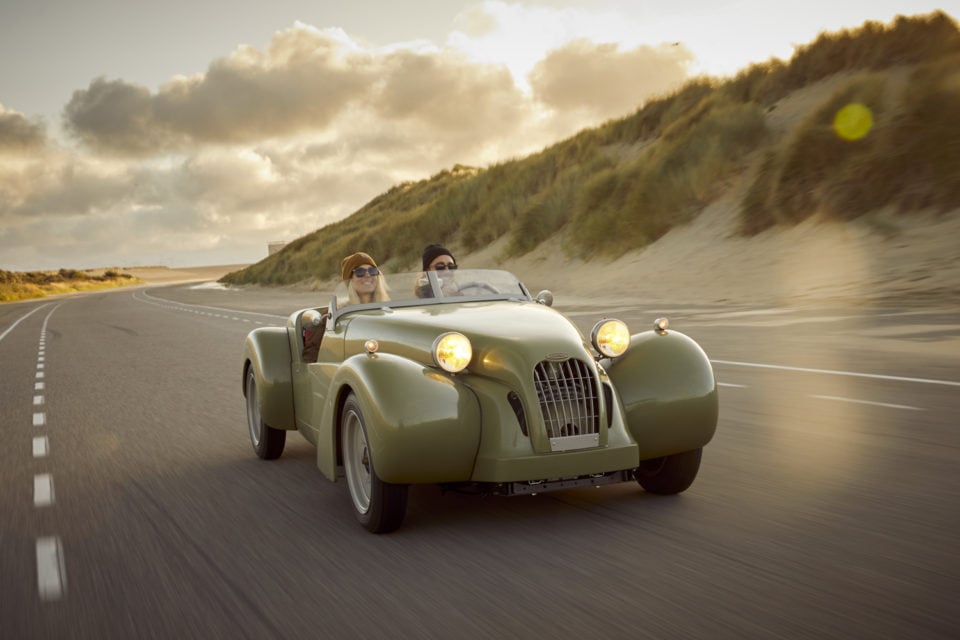
What it’s like to drive: The Burton has a unique, eye-catching presence and a very different character to more aggressive sports-car kits. It’s all about lightness, charm, and the joy of driving something slow properly, wrapped in a shape that looks far more exotic than its modest 2CV origins let on. There’s no filtering the road through power steering or ESP here — just you, the car, and whatever’s underneath the tyres.
Frequently Asked Questions
Which kit car is easiest to build for a first-timer?
The Caterham has the edge — it arrives as a genuinely complete kit with no donor car to source, and the build manual is famous for how clearly it walks you through each stage. The Aston Martin DBR1 Replicar is close behind, since most of the donor Mazda’s mechanicals stay in place and there’s no welding involved. The Factory Five, Pilgrim Sumo, and Pilgrim Speedster all ask a bit more of a first-timer, mainly around sourcing and prepping a donor vehicle before assembly even starts.
What’s the difference between a kit car and a replica car?
The terms overlap but aren’t quite the same thing. A kit car is any vehicle supplied as components for the buyer to assemble; a replica is any car built to recreate another car’s looks, kit or not. Every car on this list is both — a self-assembly kit styled after a genuine classic. Factory-built continuation cars, like AC’s own modern Cobra GT, look similar but aren’t kits at all, since you never touch a spanner.
Do kit cars hold their value?
It depends heavily on build quality and platform. Cobra replicas in particular have a strong track record — decades of established demand and thousands of examples on the road mean a well-built one is easy to sell on. Rarer builds like the Aston Martin DBR1 Replicar are harder to price precisely simply because so few exist, but the same rule applies everywhere: a clean, well-documented build from a known manufacturer will always find a buyer more easily than an unrecorded one-off.
How long does a kit car build take?
A straightforward Caterham build can take as little as 70–100 hours for a mechanically confident first-timer. More involved builds like the Factory Five Mk4 or a fully specified Pilgrim Speedster typically take several months of weekends, depending on how much of the mechanical work you’re doing yourself versus outsourcing to a specialist.
Is a kit car road legal?
Yes, provided it passes the relevant approval process for your country — an IVA (Individual Vehicle Approval) test in the UK, for example. All four kits on this list are designed and sold with road registration in mind, and reputable manufacturers will guide you through the process.
What happened to Chesil Motor Company?
We’re sad to report that Chesil, one of the most respected names in Porsche 356 Speedster replicas, entered financial difficulty in 2026. Its parent company, Westfield Chesil Limited, appointed an insolvency firm and is currently not taking new orders for kits, parts, servicing, or IVAs while the directors search for a buyer. We hope a buyer comes forward and the marque can be saved. In the meantime, if you’re after that same VW Beetle-based Speedster replica, the Pilgrim Speedster above is the closest currently active alternative — built to the same basic recipe, by a manufacturer that’s still trading.
Feeling overwhelmed by the prospect of building or restoring?
You’re not alone. Most successful builds involve calling in specialists for the tricky sections — welding, wiring, paint, or sourcing rare parts. UK specialists are consistently some of the best in the world for kit car and classic restoration work, backed by decades of expertise built up around exactly these platforms. That’s why we’ve put together our Directory of Trusted Classic Car Specialists, featuring restoration professionals, fabricators, and parts suppliers vetted for quality and customer service. And if you’d rather feel one of these cars from behind the wheel before committing to a build, click on the car and select Classic Car Hire for operators offering hire by the day or week.
Browse the Directory to find the UK specialists worth contacting, wherever in the world you’re building or restoring from.
Conclusion
Car enthusiasts might purchase a kit car for a number of reasons, but (as you might have guessed already) one big reason is to recreate a unique replica classic car.
Obviously building a car from scratch will require a lot of work, specialised knowledge, and free time but can, in certain instances, be extremely cost-effective and fearsomely potent and never less than addictive!
The good news is you have more options than just constructing a new replica car on your own. You may even want to consider trying out a ‘Restomod’ or if you consider yourself a purist, restoring a ‘genuine’ classic car. Consulting a classic car-restoration professional will help you source all the parts.