
At A Glance
2026 Dates: Sunday, 7 June — Saturday, 13 June
📍 Start & Finish: Viale Venezia, Brescia, Lombardy, Northern Italy
Nearest Airport: Milan Malpensa – 90 minutes by car
Display Days: 7 and 8 June – The perfect chance to see the cars up close before racing begins
Race Start: Tuesday, 9 June
Cost: Free to watch (public roads)
There is no better free spectator experience in the classic car calendar than the Mille Miglia. The entire route runs on public roads through the heart of Italy – no tickets, no grandstands, just you, a cobbled piazza and 400 of the most extraordinary vintage machines on the planet thundering past. Here are the best places to watch them in 2026.
We know this first hand. That’s when our friend Mauro called — after years as a draftsman at the Fiat factory in Turin, he knows Italian cars like the back of his hand. “Let’s meet at Siena’s Piazza del Campo this year,” he said. I didn’t let him finish the sentence before saying Sì, sì! Now he’s driving down from Turin to join my son and me in Siena for Day 3 — where we’ll be watching the cars roll into the Piazza del Campo for the legendary lunch stop.
A man who helped design Italian cars for a living, watching the greatest Italian cars ever made roll into one of Europe’s most beautiful squares — pure Mille Miglia magic. My son is a classic car apprentice at Bicester Heritage Academy and I run Classic Is Key — between the three of us, we’ve got this covered from drawing board to finish line.
In This Guide
-
About the Mille Miglia Race
-
Why The Route Changes Every Year
- The Show Days – Come Early
-
Day 1 – The Race Begins
-
Day 2 — Mountain Drama
-
Day 3 — The Lunch Stop
-
Day 4 — Hill Town Magic
- Day 4 — For the Sound Alone
- Day 5 — The Finish Line
-
Practical Tips for Spectators
- How to Get There
-
What to Wear
-
Where to Stay
- Escorted Tour Packages
-
What to Pack
- Can’t Make it in 2026?
About The Mille Miglia Race
The Mille Miglia — “a thousand miles” in Italian — is a road race through the heart of Italy, beginning and ending in Brescia, a city in Lombardy roughly 90 minutes from Milan. The original race ran from 1927 to 1957, a glorious and genuinely dangerous open-road sprint that drew Ferrari, Alfa Romeo, Maserati and Mercedes-Benz to fight it out on public roads through medieval towns and mountain passes. In 1955, Stirling Moss and his navigator Denis Jenkinson covered the entire route in just over ten hours — a drive still considered one of the greatest in motorsport history.
Tragically, a devastating crash in 1957 brought the original race to a permanent close. The legend, however, refused to die. In 1977, the Mille Miglia was reborn as a regularity rally for classic and vintage cars, and the rules remain gloriously strict: only cars produced before 1957 and registered to the original race are eligible to compete. Roughly 400 of the most extraordinary machines on the planet, all on public roads, all free to watch.
Why this matters for spectators: This isn’t a static museum display — these are running, breathing icons driven hard by their owners. That’s what makes the Mille Miglia the best free classic car event in Europe.
Whether you have one day or all five, these are the stops that no serious classic car enthusiast should miss — from the emotional theatre of the Brescia start line to the extraordinary sight of pre-war machinery filling one of the world’s most beautiful medieval squares.
Why the Route Changes Every Year: The race always starts and finishes on the Viale Venezia in Brescia, but the precise route shifts each year as organisers choose a fresh set of towns, mountain passes and landmarks to showcase. The 2026 edition retraces the historic figure-of-eight of the very first editions, running across five days from 9 to 13 June.
For the full route map, see the Official Mille Miglia website
The Show Days – 7 & 8 June
Where: Viale Venezia, Brescia, Lombardy, Northern Italy
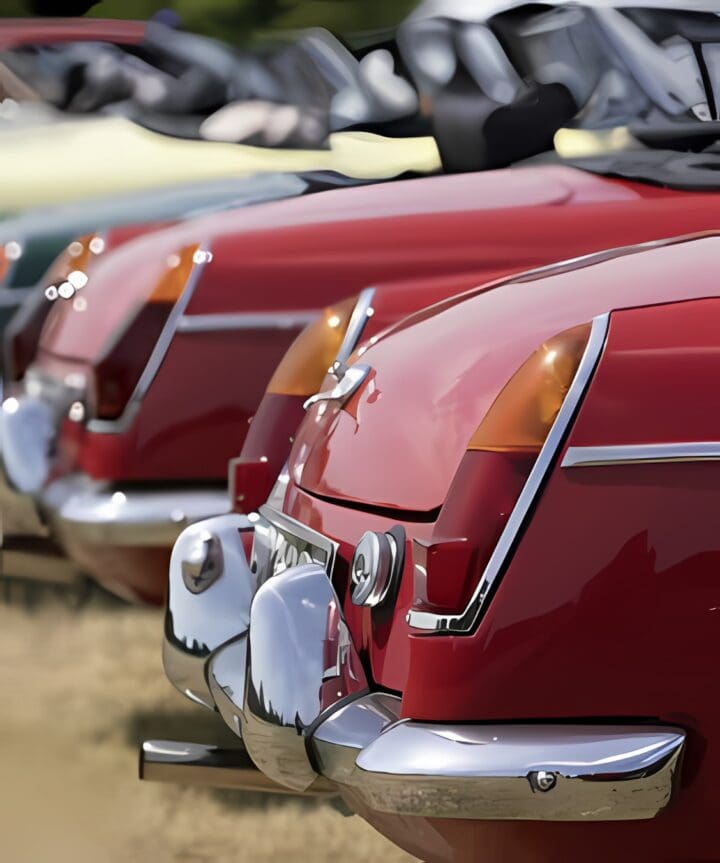
The Mille Miglia experience begins two days before the race even starts. The 1000 Miglia Village opens at 4.30pm on Sunday, 7 June along the Viale Venezia, giving spectators an extraordinary opportunity to get up close to the competing cars in a way that is simply impossible once racing begins. Wander among 400 of the world’s most extraordinary classic cars, soak up the atmosphere that builds steadily through Sunday and into Monday.
Pro tip: This is the best opportunity of the entire week to photograph the cars at close range. Arrive Sunday afternoon and take your time – the crowds are manageable and the cars are stationary.
Day 1 – The Race Start – Tuesday, 9 June
Where: Viale Venezia, Brescia, Lombady – 90 minutes from Milan
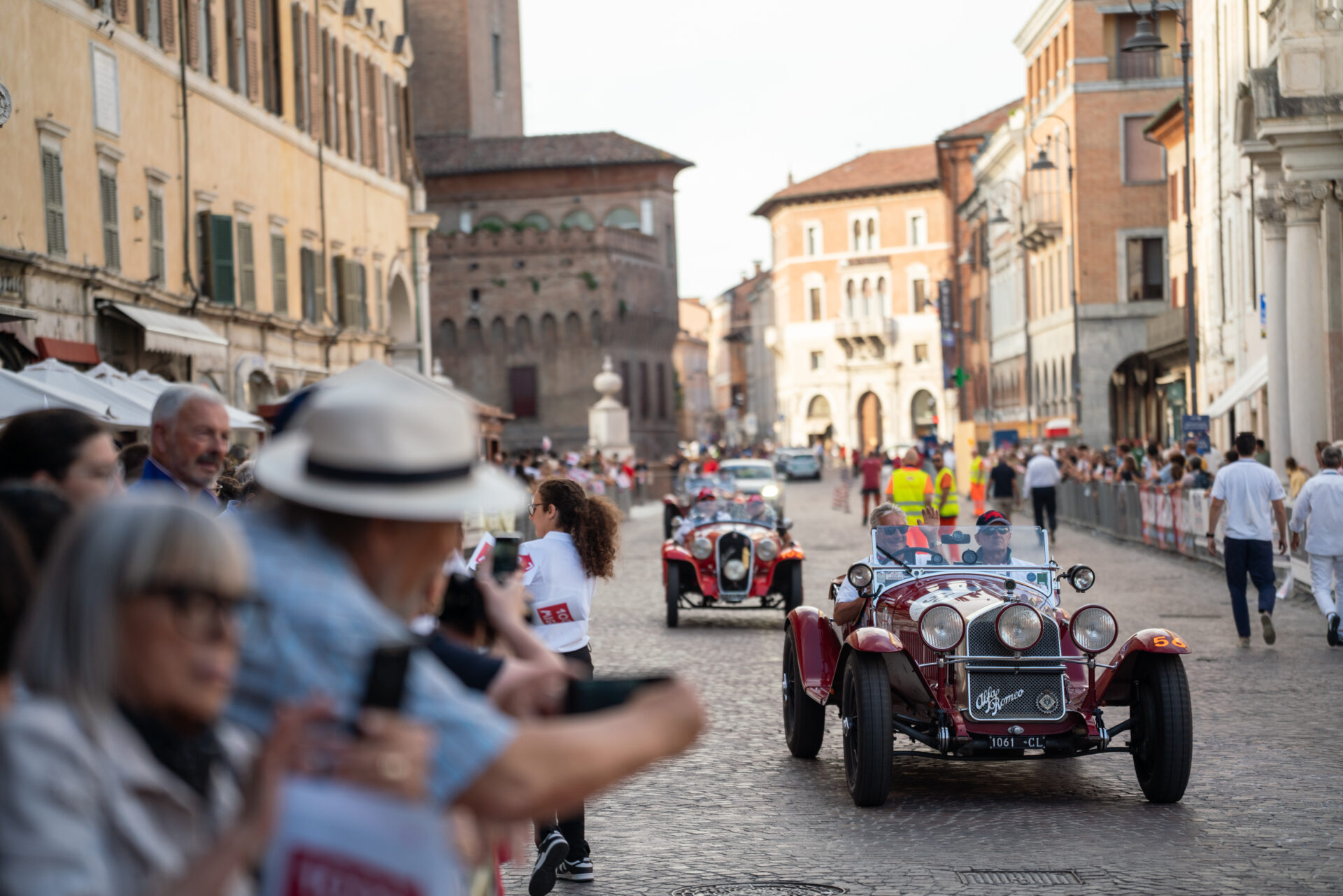
The cars line up along the Viale Venezia from early morning and the atmosphere builds quickly – bars fill up, crowds grow and the noise of warming engines echoes off the surrounding buildings. Each car departs individually, timed to the second, making the start a slow-burning spectacle that lasts for hours rather than a single dramatic moment.
Pro tip: Don’t head straight to the start ramp – walk away from the start to see the cars lined up and waiting. You can get within touching distance of every car in the race before they are called forward. Arrive at 8am for best positions.
Tuesday, evening — 1000 Miglia: The Night
One of the unmissable moments of the whole week — Brescia celebrates long into the evening as the last cars depart into the darkness.
What the Start Line Really Looks Like
No photograph does it justice. This footage from the 2025 race captures exactly what you can expect on the Viale Venezia. The cars departing one by one, the officials, the crowds pressing close, and the extraordinary atmosphere of race morning in Brescia
Day 2 — Mountain Drama – Wednesday, 10 June
Where: The Abetone Pass, Northern Tuscany – 2 hours from Brescia
Classic Is Key pick — not an official stop but one of the best viewing spots on the entire route.
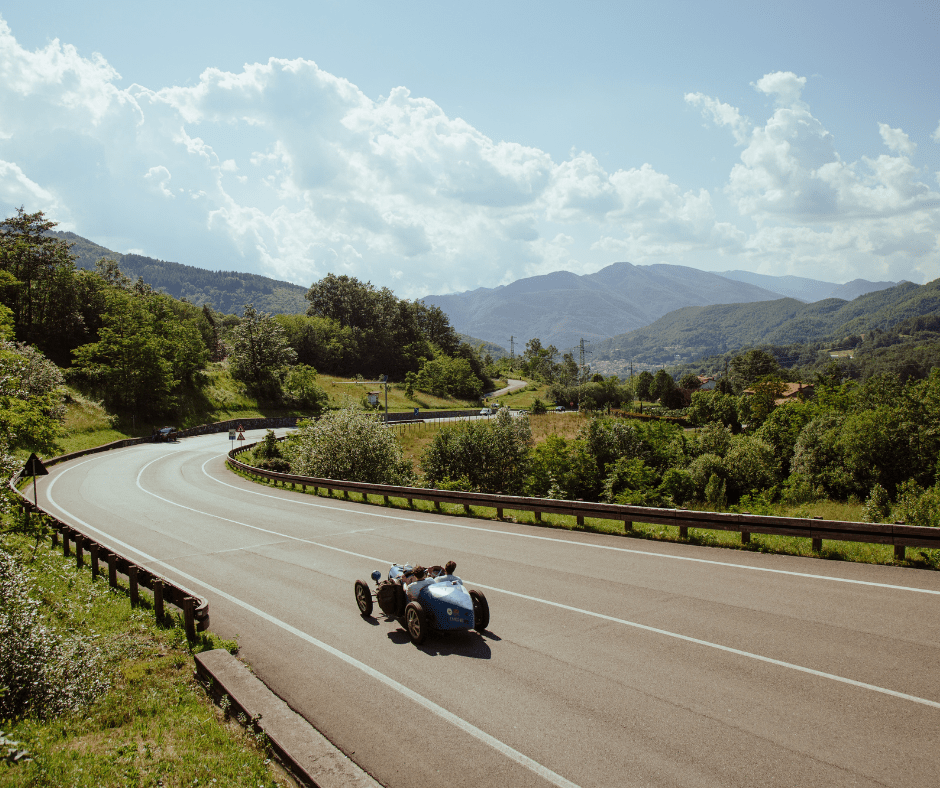
If the city stops are about atmosphere, the Abetone Pass is about the cars themselves. This mountain pass gives spectators something the piazzas cannot — space, drama, and the extraordinary sight and sound of vintage machinery working hard on a serious climb. Far less crowded than the city stops, it rewards those willing to make the effort with an experience that feels genuinely close to the original race. The sound of a pre-war engine on a mountain pass is something else entirely.
Pro tip: Bring layers — mountain temperatures can drop significantly even in June. And bring binoculars — the cars appear as dots in the distance before the sound reaches you.
Day 3 — The Lunch Stop – 11 June, from 11am
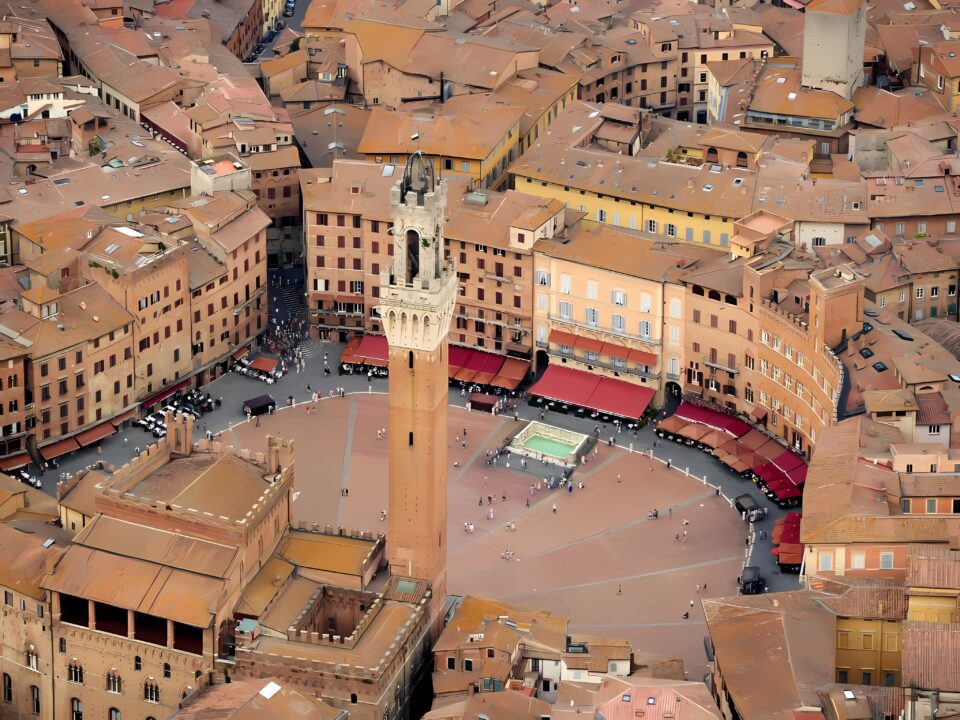
Where: Piazza del Campo, Siena, Tuscany – 2.5 hours south of Brescia
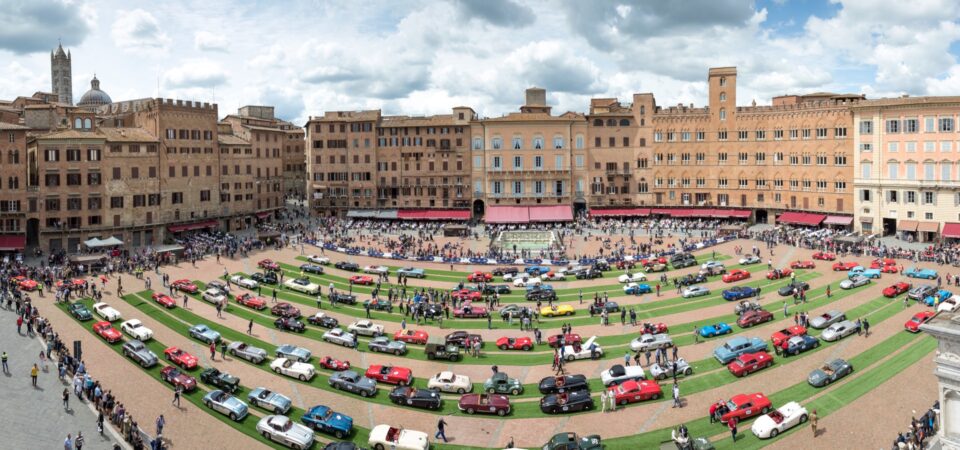
This is the one. The Piazza del Campo is one of the most beautiful medieval squares in the world — and one of the most famous. Twice a year it transforms into a racetrack for the Palio di Siena, the legendary bareback horse race that has divided the city into rival contrade for over 700 years. On Day 3 of the Mille Miglia it transforms again — this time into a lunchtime sanctuary for 400 of the world’s most extraordinary vintage cars.
The sight of pre-war Ferraris, Alfa Romeos and Bugattis filling that extraordinary shell-shaped piazza is something that will stay with you forever. The square fills with both cars and spectators, the local restaurants spill onto the streets, and the whole of Siena turns out to celebrate. It is, without question, the single greatest free spectator moment of the entire event.
The Piazza del Campo rewards those who arrive with time to spare. Even without the Mille Miglia passing through, this square has been drawing visitors for centuries — and understanding its history makes the experience of watching the cars arrive all the richer. If you want to go deeper into the story of Siena and the Palio before your visit, Context Travel offer expert-guided Palio tours led by local historians — one of the best ways to truly understand the city you are standing in.
Pro tip: Arrive by 10am at the very latest. The Campo fills quickly and the best viewing positions go early. This is where we’ll be — look out for Mauro!
Day 4a — Hill Town Magic – Friday, 12 June
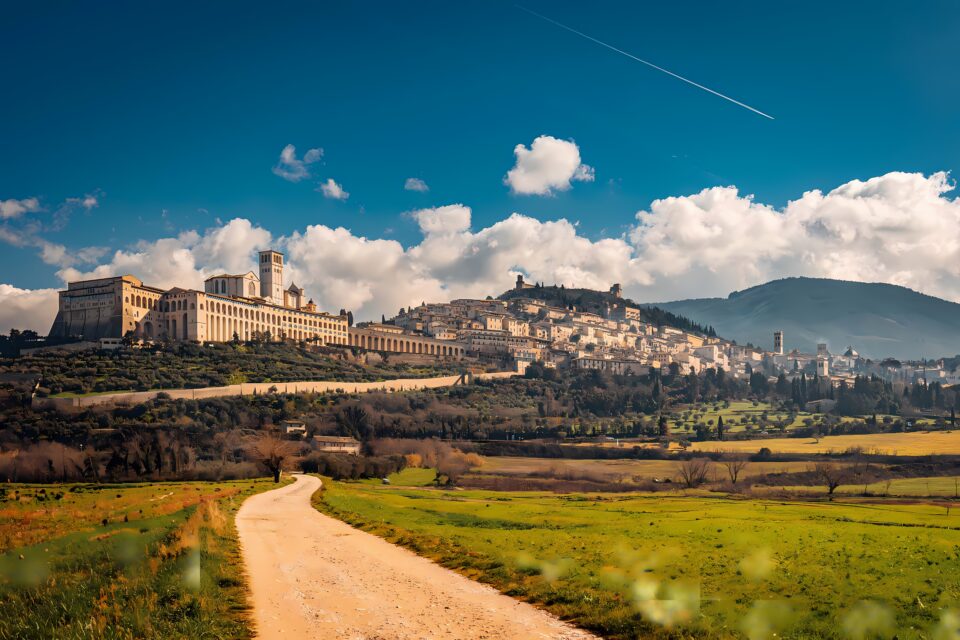
Where: Assisi, Umbria – 3 hours south of Brescia
The 2026 route passes through Assisi on Day 4, marking the 800th anniversary of the death of St Francis. The sight of classic cars winding through a perfectly preserved medieval hill town against the backdrop of the Basilica is one of those Mille Miglia moments that reminds you why this event is unlike anything else in motorsport. The crowds here are manageable compared to Siena and Brescia, making it a more relaxed and intimate viewing experience.
Pro tip: Position yourself on the approach roads into town for the best action, then move into the centre once the cars have passed for lunch.
Day 4b — For the Sound Alone – Friday, 12 June
Where: The Furlo Gorge, Le Marche – 30 minutes from Assisi
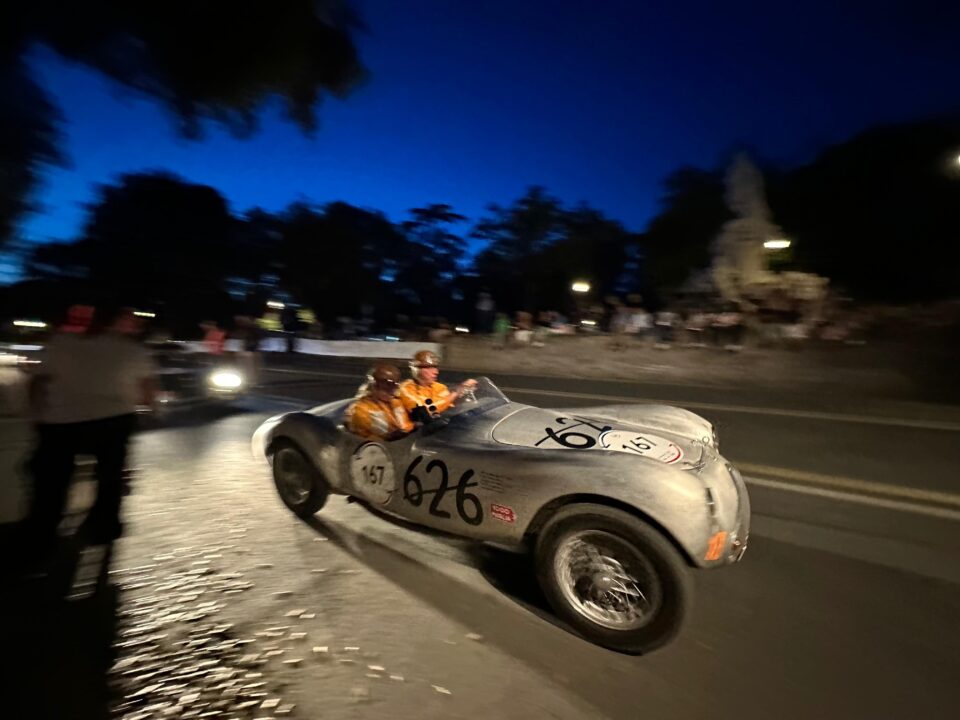
The Furlo Gorge is one of the most dramatic sections of the entire 2026 route — a narrow limestone gorge carved by the Candigliano river, with sheer walls that amplify the sound of vintage engines in a way that has to be heard to be believed. This is a pilgrimage spot for serious enthusiasts and one of the best-kept secrets on the entire route. Go out of your way for it. You will not regret it.
Pro tip: The gorge is narrow and parking is limited — arrive early and be prepared to walk.
Day 5 — The Finish Line – Saturday, 13 June
Where: Viale Venezia, Brescia, Lombardy – 90 minutes from Milan
The emotional conclusion to the whole event. The same stretch of road that sent the cars on their way on Tuesday morning welcomes them home on Saturday, and the atmosphere — relief, joy, exhaustion and celebration in equal measure — is genuinely moving. Combine it with a visit to the Mille Miglia Museum, just a ten-minute walk away and one of the finest motorsport museums in Europe. The perfect full stop to the perfect classic car week.
Pro tip: The Mille Miglia Museum is worth half a day on its own. If you’re in Brescia for the finish, build it into your plans
Practical Tips for Mille Miglia Spectators
-
Plan around road closures — roads along the route are closed while the cars pass through. Do not plan to drive between stops during race hours — position yourself early and stay put until the passage is complete
-
Everything is free — the entire route runs on public roads. No tickets needed except for grandstand seating at the start and finish in Brescia
-
Book accommodation early — Siena and Brescia fill completely. Book six to twelve months in advance
-
Download the official app — real-time car tracking and stage timing makes planning your day infinitely easier
-
Smaller towns are underrated — the villages between the major stops often provide the most intimate viewing and the friendliest crowds
How to Get There
Flying in: Milan Malpensa or Linate for Brescia (start/finish). Florence Peretola for Siena (Day 3 lunch stop). Rome Fiumicino for the halfway point.
Getting around: A hire car gives you the flexibility to follow the route across multiple days and is strongly recommended. Trains connect the major city stops if you prefer to base yourself in one location.
What to Wear
This is Italy — and la bella figura applies to spectators every bit as much as competitors. You don’t need to overthink it but a little consideration goes a long way.
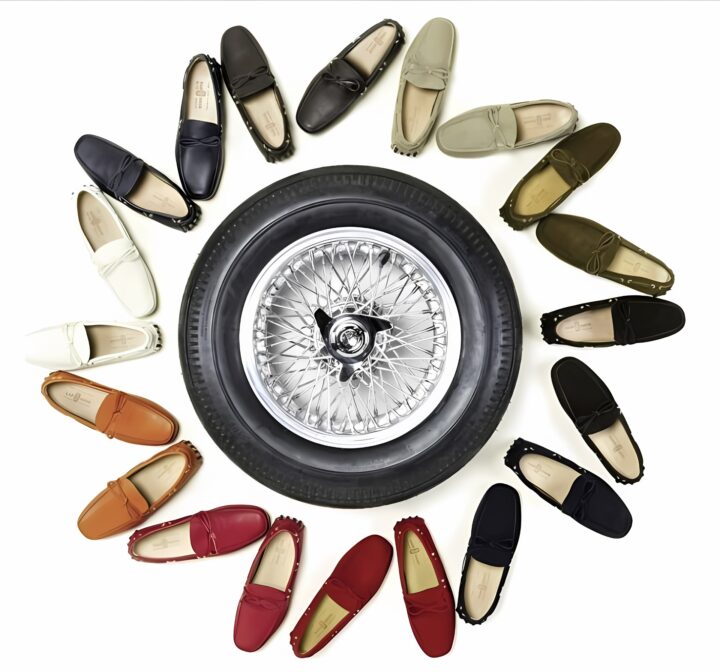
For him: A linen polo or open-necked linen shirt is the perfect base — lightweight, breathable and entirely appropriate for a long day in the Italian sun. Pair with well-fitted chino shorts or linen trousers and a lightweight rain jacket that packs down small enough to slip into your day bag. Clean leather loafers or leather-soled trainers finish the look. Leave the fleece and running shoes at home — this is Italy, and the crowd will notice.
For her: A linen midi dress is the effortless answer — cool, elegant, and perfect for cobblestones. Pack two and you are dressed for every occasion from a mountain pass to a candlelit dinner in Siena. Add a lightweight wrap for the evenings when the temperature drops, flat leather sandals for comfort on uneven surfaces, and you are done.
For both: The official Mille Miglia silk scarf is the one accessory that ties the whole look to the occasion — worn at the neck, as a headscarf or draped over the shoulders in the evening. It also solves the church dress code you will encounter in almost every town along the route.
Where to Stay: Hand-Picked Hotels
Here at Classic Is Key HQ we’ve partnered with Mr & Mrs Smith to bring you hand-picked boutique and luxury hotels along the route — every property personally vetted for quality, location and that all-important Classic Is Key standard. Browse their full Italian collection at mrandmrssmith.com or see our top picks below, organised by location.
Near Brescia, Lombardy (Days 1 & 5)
Lefay Resort & Spa, Lake Garda The finest spa resort on Lake Garda and one of the great Italian hotel experiences. Perched on a hilltop above the lake with private hot tubs, an organic restaurant, swimming pools and meditation gardens — just thirty minutes from the Brescia start line. Arrive a day early, decompress, and let Italy do its thing before the race begins.
L’Albereta Relais & Châteaux, Brescia A few minutes from Lake Iseo and a short drive from Brescia, L’Albereta is an enchanting Relais & Châteaux property with an award-winning Espace Vitalité Henri Chenot spa. For those who want to be closer to the start line without sacrificing an ounce of luxury, this is the one.
Near Siena, Tuscany (Day 3)
Castel Monastero, Chianti A beautifully restored medieval monastery and hamlet in the Chianti hills, twenty minutes from the Piazza del Campo. Seventy exclusive rooms and suites, a purifying spa, yoga and meditation. The perfect retreat after a long afternoon on the roadside in Siena — and considerably more peaceful than staying in the city itself.
Castello di Casole, Siena — The Splurge Set on a rolling 4,200-acre estate in the hilltop town of Casole d’Elsa in the heart of Tuscany, this Belmond hotel has cinematic beauty, an infinity pool with sweeping valley views, and a spa that will have you forgetting the cars entirely — at least until morning. One of the most special hotels in all of Italy.
Adler Thermae Spa & Relax Resort, Val d’Orcia Set among the quiet hills of Siena in San Quirico d’Orcia, this five-star resort blends Mediterranean charm with exceptional thermal spa facilities built around local travertine stone. Perfectly positioned between Siena on Day 3 and Assisi on Day 4 — and one of the most serene places to stay in all of Italy.
Near Assisi, Umbria (Day 4)
Aethos Saragano, Umbria A reimagined medieval village with suites set around a traditional cobblestoned square in the Umbrian hills, with a pool on the hillside and hilltop restaurants a short drive away. Perfectly placed for Assisi and the Furlo Gorge on Day 4 — and one of the most atmospheric places to stay along the entire route.
Escorted Tour Packages
If the idea of coordinating five days across multiple Italian cities feels like a lot, these three specialist operators offer fully escorted packages that take the planning entirely off your hands — with exclusive access, boutique hotels and guided viewing positions included. Here at Classic Is Key HQ we think this is genuinely the best way to experience the Mille Miglia for the first time.
Twynhams Tours — The VIP Experience Join the six-night hosted tour from 8–14 June 2026 for exclusive vantage points, boutique hotels, authentic restaurants and visits to the Ferrari Museum in Maranello, the Pagani Factory and Museum, and the Lamborghini and Enzo Ferrari Museums in Modena. The most comprehensive VIP package available for the 2026 event.
Grandstand Motor Sports — Lake Garda Base Fly from the UK to Verona, stay on Lake Garda at the Hotel Degli Oleandri, enjoy a boat tour of the stunning Isola del Garda, visit the Mille Miglia and Enzo Ferrari Museums, and be guided throughout by a Grandstand representative. A beautifully organised package with a loyal following among Classic Is Key’s kind of reader.
Select Motor Racing — Follow the Route Designed to hop the route and explore different towns along the way, ending in Brescia — with hotel, breakfast, daily transfers, welcome drinks and Brescia Museum admission all included. The most flexible of the three and ideal if you want to cover multiple spectator stops across the five days.
What to Pack: Spectator Essentials
A long day on the route calls for a little preparation. Here are the items we consider non-negotiable.
Nikon Aculon T02 10×21 Compact Binoculars — approx. £69.99 Weighing just 195g, the Nikon Aculon T02 is the perfect travel companion — easy to slip into a pocket or bag, yet powerful enough to bring distant subjects into clear view with 10x magnification. At mountain pass sections like the Abetone, the cars appear on the horizon long before they arrive — and without binoculars you will wish you had them.
Helinox Chair One Lightweight Folding Chair — approx. £139.95 The award-winning Helinox Chair One weighs just 950g and folds down small enough to carry anywhere. Standing for six hours on a cobbled roadside in Assisi is a fast route to a very bad afternoon. The Helinox is the answer — ultralight, genuinely comfortable, and the one serious classic car spectators reach for. Supports up to 145kg and comes in eight colours — we’d go for Forest Green, naturally.
Can’t Make It in 2026? Plan for 2027 Now
One of the most wonderful things about the Mille Miglia is that it happens every year — usually in June, always starting and finishing in Brescia, always different. If 2026 isn’t possible, start planning for 2027 now.
2027 is the centenary edition — 100 years since the very first Mille Miglia in 1927. Expect it to be the most extraordinary edition in the modern era, with the largest field, the most significant entries and celebrations unlike anything seen since the revival began. You do not want to miss it. Start planning now.
And even if you’re not following the race, the hotels, roads and towns along the route make for one of the great Italian road trip itineraries at any time of year. The Chianti hills, the Val d’Orcia, the Umbrian hill towns, Lake Garda — these are places worth visiting whether a pre-war Ferrari is passing through or not. Bookmark this post, save the hotel recommendations, and plan your own classic Italian road trip whenever the moment is right.
Want to stay up to date with the Mille Miglia and the best classic car events in Europe? Sign up for the Classic Is Key newsletter below.
Final Thoughts
The Mille Miglia is one of those events that goes straight onto the bucket list the moment you discover it exists — and straight to the top once you’ve been. Whether you plant yourself in Brescia for the start, make the pilgrimage to Siena for the lunch stop, or follow the route across all five days, it is an experience that reminds you exactly why classic cars matter.
The 2026 event runs 9 to 13 June. Book the flights, pack the hamper, and stay for a few days — you will not regret a single moment of it. We’ll see you on the route.
If watching the cars inspires you to bring your own classic up to the same specification, our Classic Car Restoration Directory is a great place to start.
Which stop on the 2026 route are you planning to watch from? Drop us a comment below.
More from Classic Is Key
🔧 Classic Car Restoration Directory — find a specialist to keep your classic in Mille Miglia condition
🏁 Top European Classic Car Rallies — the best events on the continent
🚗 Best Classic Cars for Rally Beginners — thinking about entering? Here’s where to start